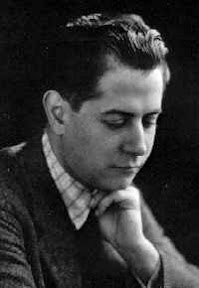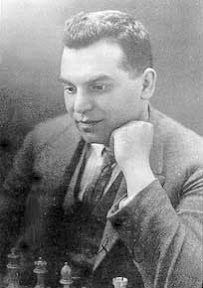
Showing posts with label Jose Raoul Capablanca. Show all posts

Wednesday, 13 June 2007

Richard Réti: New York 1924

Richard Reti Chess Player
To coincide with listing Réti's Best Games of Chess on eBay, I'll talk this week about some of his finest moments.

At the famous New York International Chess Tournament 1924 Richard Réti defeated two World Champions, Capablanca and Alekhine, and won the 'first brilliancy prize' for a 25 move miniature against Bogoljuboff. Capablanca lost very few games in his career, and incredibly, his defeat against Réti was his first loss for 8 years!

This is the crucial position, after 25 moves, where Réti, playing White, found a move that sounded the death knell for Capablanca:

Reti Capablanca New York 1924

26 Nd4!

The game concluded:

26 ... Bxg2; 27 Kxg2 Qe5; 28 Nc4 Qc5; 29 Nc6 Rc7; 30 Ne3 Ne5; 31 R1d5 resigns

I was amazed to find that 31 R1d5 was actually a sealed move. Did they really play sessions as short as 30 moves at New York?

You can play through the games against Capablanca and Alekhine online.

Friday, 13 April 2007

Friday chess puzzle

Capablanca vs Lasker Blitz Game
Here's the first "Friday chess puzzle" on Chess Tales.

I was shown this position earlier this week, and it's allegedly from a blitz game between a young Capablanca and World Champion Emanuel Lasker in 1914. Tim Krabbe casts some doubt on whether it's an actual game position, or something the pair cooked up in the game post-mortem. Either way, it's a great position, and even featured on a Cuban stamp.

The question is: How does White (to play) force a quick win?

(Answers by Wednesday to roger AT 21thoughts DOT com)

Saturday, 7 April 2007

Capablanca's Chess Fundamentals

Jose Raoul Capablanca
At his peak Cuban world chess champion Jose Raoul Capablanca was close to unbeatable. His play seemingly effortlessly smooth and his handling of endings was legendary. At the same time though he was considered as 'lazy' and spent little time learning opening theory.

His famous book, "Chess Fundamentals", is an oddity. A mish-mash that has parts for absolute beginners coupled with sections that the strongest player could learn from. He covers chess basics, advanced principles, particularly on the endings, a few complex tactical positions, and a handful of annotated games. Often, Capablanca leaves variations for the reader to find out ('to save space!').
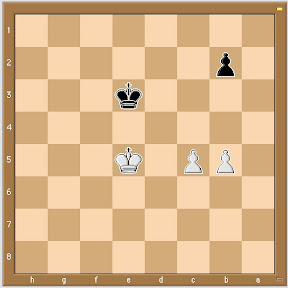
Capablanca Chess Ending

This 'simple' endgame position is typical. Capablanca points out that White can win by f4-f5, and that Black's best defensive try would then be g7-g6. So, answers to me by Monday on roger AT 21thoughts DOT com: how does White win after 1. f5 g6 ? (I admit I resorted to a board to work it out).

Presentation

Chess Tales uses Picasa, part of Google Pack, for photos and images:

Find a sponsor for your web site. Get paid for your great content. shareasale.com.

Creative Commons License
Chess Tales by Roger Coathup: A collection of online articles about chess and chess players.